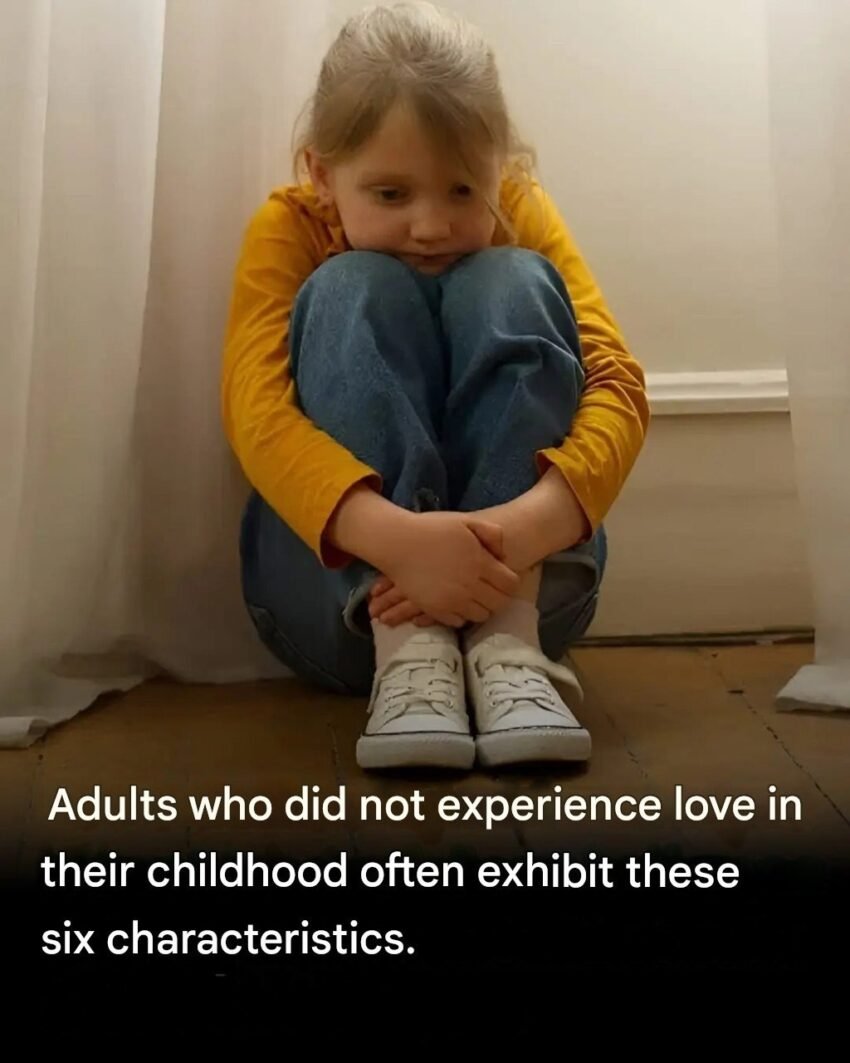
That experience—growing up without sufficient affection—shapes a person in profound and lasting ways. While everyone’s journey is unique, many adults from emotionally sparse childhoods share certain traits, behaviors, or internal struggles.
Here are 6 common threads they may share:
1. Difficulty Trusting and Being Vulnerable
When emotional needs were consistently unmet or dismissed in childhood, the learned survival strategy is often to keep walls up. Trust feels dangerous because depending on or opening up to others was not safe. As adults, they may:
-
Struggle to ask for help.
-
Find deep intimacy frightening.
-
Assume others will let them down or leave.
2. Chronic Feelings of “Being Different” or “On the Outside”
There’s often a lingering sense of not fitting in, especially in emotionally warm or expressive settings. They might feel like they’re “observing” social or family interactions rather than naturally participating, because the emotional language of closeness feels foreign or performative.
3. Hyper-Independence or Reluctance to Rely on Others
This is a logical adaptation: if you couldn’t rely on caregivers for emotional (or sometimes practical) support, you learn to do everything yourself. As adults, this can look like:
-
Extreme self-reliance, sometimes to the point of burnout.
-
Discomfort when others try to care for them.
-
Viewing dependence as weakness.
4. Difficulty Identifying and Expressing Emotions (Alexithymia)
If emotions weren’t mirrored, discussed, or validated in childhood, people can grow up disconnected from their own inner world. They may:
-
Have a limited emotional vocabulary.
-
Feel “numb” or confused by strong feelings.
-
Experience emotions physically (headaches, tension) rather than recognizing the feeling itself.
5. Overachievement or People-Pleasing as a Search for Worth
Affirmation wasn’t given freely, so they might learn to earn it through performance. This can manifest as:
-
Perfectionism and fear of failure.
-
Constantly seeking external validation.
-
Putting others’ needs first to secure connection, often at their own expense.
6. Deep-Seated Fear of Rejection or Abandonment
Even if they seem independent, the core wound of emotional neglect often translates into a heightened sensitivity to real or perceived rejection. Small slights can feel catastrophic, sometimes leading to:
-
Preemptively pulling away from relationships.
-
Interpreting neutral events as signs of disinterest.
-
Staying in unsatisfying relationships to avoid being alone.
Important nuance: These traits are not flaws—they are survival adaptations that served a purpose in an emotionally barren environment. The good news is that with awareness, supportive relationships, and often therapeutic work, these patterns can be understood, softened, and healed. Many adults from these backgrounds develop profound empathy, resilience, and a fierce commitment to breaking the cycle for the next generation.