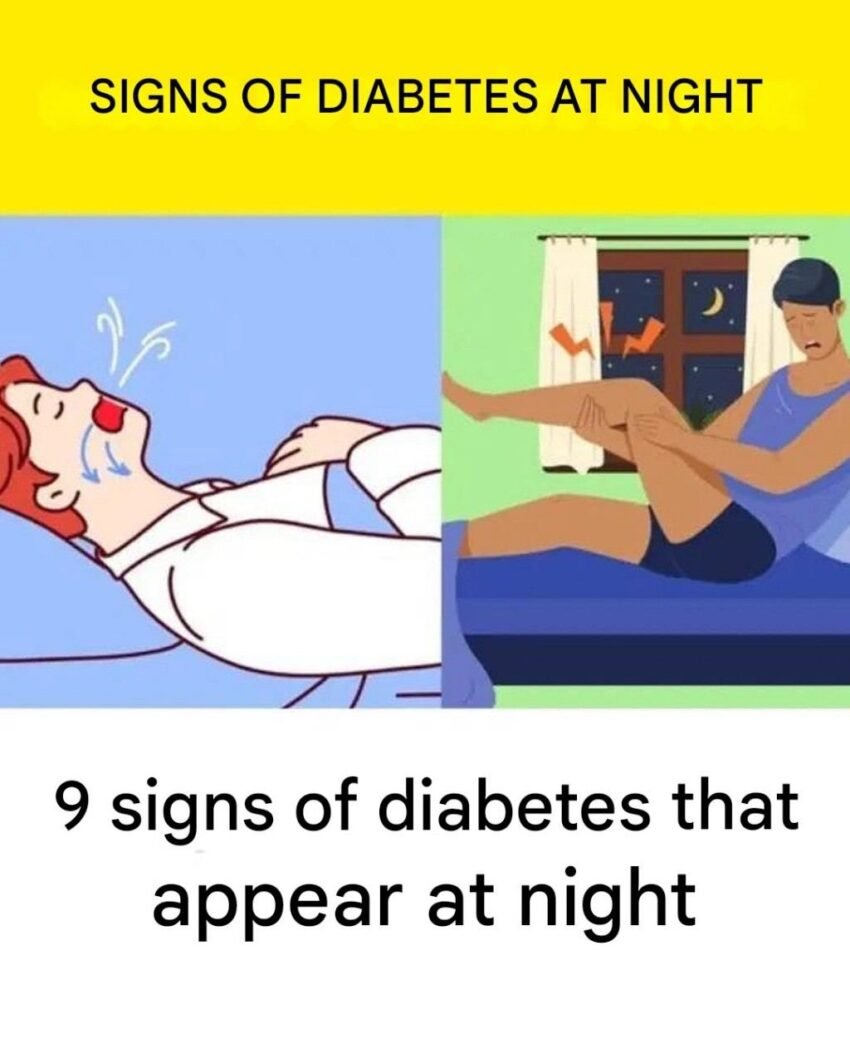
Here are 9 signs of diabetes that may be particularly noticeable or disruptive at night:
1. Frequent Urination (Nocturia)
-
What it is: Waking up multiple times during the night with an urgent need to urinate.
-
Why it happens: High blood sugar levels force the kidneys to work overtime to filter and absorb the excess glucose. When they can’t keep up, the glucose is excreted into urine, pulling fluids from your body and triggering frequent urination.
2. Extreme Thirst (Polydipsia)
-
What it is: Waking up parched and needing to drink water, often accompanying nocturia.
-
Why it happens: The fluid loss from frequent urination dehydrates the body, leading to intense, often unquenchable thirst.
3. Nighttime Hunger (Polyphagia)
-
What it is: Feeling intense hunger pangs in the middle of the night or before bed, even after eating dinner.
-
Why it happens: With diabetes, the body’s inability to use glucose for energy can signal cells that they are “starving,” leading to sudden hunger signals.
4. Tingling, Numbness, or Burning in Hands/Feet
-
What it is: A pins-and-needles sensation, pain, or numbness in the extremities that becomes more noticeable when trying to relax or sleep.
-
Why it happens: Persistently high blood sugar can damage nerves and blood vessels, leading to diabetic neuropathy. The quiet of night often makes these sensations more prominent.
5. Restless Legs Syndrome (RLS)
-
What it is: An overwhelming, irresistible urge to move the legs, often accompanied by uncomfortable crawling or creeping sensations.
-
Why it happens: Diabetes is a known risk factor for RLS, potentially due to nerve damage or iron metabolism issues linked to the disease.
6. Night Sweats
-
What it is: Waking up drenched in sweat, unrelated to room temperature or heavy bedding.
-
Why it happens: When blood sugar drops too low overnight (nocturnal hypoglycemia), especially in those on insulin or certain medications, the body releases adrenaline to raise it, which can cause sweating, chills, and shaking.
7. Dry Mouth
-
What it is: Waking up with a very dry, sticky mouth and possibly a sore throat.
-
Why it happens: This is primarily due to dehydration from high blood sugar and frequent urination. It can also be a sign of undiagnosed sleep-disordered breathing, which is more common in people with diabetes.
8. Unrefreshing Sleep & Fatigue
-
What it is: Waking up feeling exhausted despite a full night’s sleep, or experiencing extreme daytime fatigue.
-
Why it happens: The body’s cells are deprived of energy (glucose), and frequent trips to the bathroom, discomfort from neuropathic pain, or blood sugar fluctuations fragment sleep, preventing deep, restorative sleep stages.
9. Rapid Heartbeat or Nighttime Anxiety
-
What it is: Waking up with a racing heart, feeling anxious, jittery, or confused.
-
Why it happens: This is a classic sign of nocturnal hypoglycemia (low blood sugar at night). The body releases stress hormones like adrenaline to raise blood sugar, triggering these symptoms.
What to Do If You Experience These Signs:
-
Do Not Ignore Them. These symptoms, especially in combination, are your body’s alarm system.
-
Consult a Doctor. A simple blood test (like a fasting blood glucose or an HbA1c test) can diagnose prediabetes or diabetes.
-
Track Your Symptoms. Note what you experience, how often, and any potential triggers to share with your healthcare provider.
-
Prioritize Sleep & Hydration. While not a cure, good sleep hygiene and proper hydration can help manage some symptoms temporarily.
Early diagnosis and management of diabetes are crucial to prevent serious long-term complications like heart disease, vision loss, kidney disease, and nerve damage. If these night-time signs sound familiar, schedule a check-up as soon as possible.