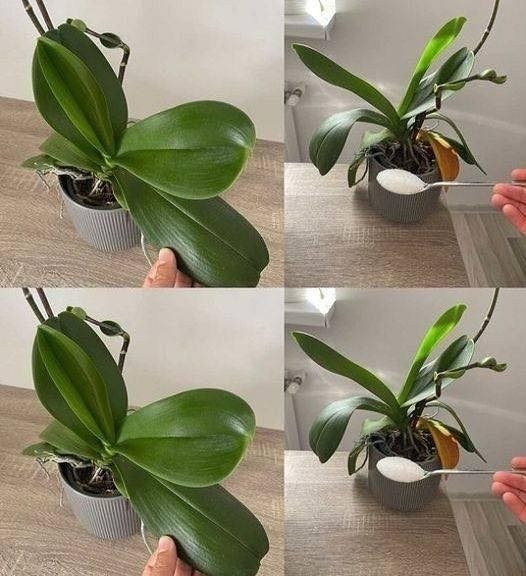
This claim is a common gardening “hack” you’ll see online, often suggesting ingredients like rice water, cinnamon, eggshells, or apple cider vinegar.
While there’s some truth behind the idea of using mild, homemade fertilizers for orchids, it’s important to be cautious. Orchids are sensitive, and the wrong treatment can damage their roots or kill the plant.
Let’s break down the most popular “1 tablespoon” suggestions and the reality behind them:
Most Likely Candidate: Rice Water
-
The Claim: Soaking rice in water, then using 1 tablespoon of that starchy water per watering, provides carbohydrates and mild nutrients that stimulate blooming.
-
The Reality: Rice water contains traces of vitamins and minerals, and the starches can feed beneficial soil microbes. It’s mildly beneficial if used correctly (fermented/diluted). However, it is NOT a complete fertilizer and can promote fungal growth if overused.
Other Common “1 Tablespoon” Suggestions:
-
Apple Cider Vinegar: Used to lower pH and add acidity. RISKY. Orchids do prefer slightly acidic water, but just 1 tablespoon in your regular watering can is often too strong and can burn roots. Extreme caution needed.
-
Eggshell Water: A source of calcium. Takes a long time to steep and the calcium is not readily available. Not an effective bloom booster.
-
Cinnamon: This is actually a great fungicide/antiseptic for treating cuts on orchid stems or roots. It does not act as a fertilizer.
The Scientific & Safer Approach: What Orchids Really Need
For orchids (especially common Phalaenopsis) to “bloom non-stop,” they need the right balance of light, temperature, water, and nutrition.
A powerful, yet safe fertilizer strategy is this:
-
Use a Balanced, Water-Soluble Fertilizer: Look for one formulated for orchids, or a general 20-20-20 balanced fertilizer.
-
The Golden Rule: “Weekly, Weakly” This is the mantra of orchid growers. Instead of strong, monthly doses, use a very diluted dose every time you water.
-
Dilute the fertilizer to 1/4 or 1/2 the strength recommended on the label.
-
-
For Blooming: Boost Phosphorus. To encourage flower spikes, switch for a few feedings to a fertilizer with a higher middle number (e.g., 10-30-20) when you see a new spike forming.
The Real “1 Tablespoon” Miracle? Proper Care.
-
Light: Bright, indirect light is the #1 key to triggering blooms. Without enough light, no fertilizer will work.
-
Temperature Drop: A 10-15°F drop at night for a few weeks in fall often initiates flower spike formation.
-
Proper Watering: Water deeply when the medium is dry and the roots are silvery, then let it drain completely. Never let the plant sit in water.
-
Root Health: Healthy, green/silver roots in a well-aerated potting mix (like orchid bark) are essential.
Conclusion:
While a tablespoon of diluted rice water might offer a mild, organic nutrient boost, it’s not a magic bullet. The safest and most effective way to get non-stop blooms is to:
-
Master the basics of light and watering.
-
Use a diluted orchid fertilizer regularly (“weekly, weakly”).
-
Give your orchid a slight temperature drop in its growing season.
Skip the untested kitchen concoctions that could harm your plant, and stick with proven, gentle fertilization methods for the best results.