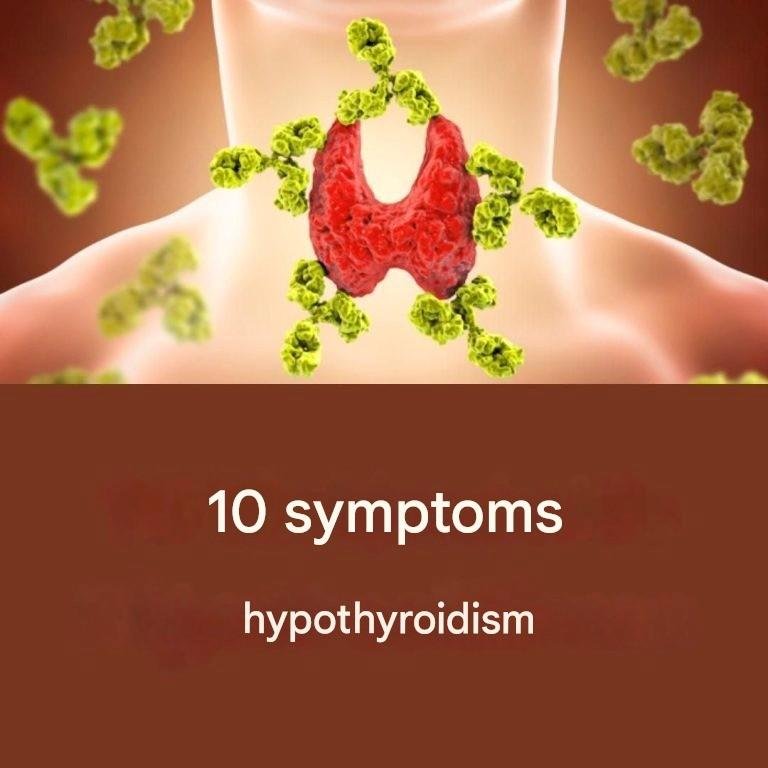
It’s important to remember that these symptoms can be subtle and develop slowly, often mistaken for stress or aging. Only a healthcare professional can diagnose hypothyroidism through blood tests.
Here are 10 common symptoms of an underactive thyroid (hypothyroidism):
1. Fatigue and Low Energy
The most classic symptom. It’s a profound, unrelenting tiredness that isn’t relieved by sleep, often described as a lack of energy to do everyday tasks.
2. Unexplained Weight Gain
Gaining weight despite no significant change in diet or exercise habits. This is due to a slowed metabolism and can be accompanied by difficulty losing weight.
3. Sensitivity to Cold
Feeling unusually cold in environments where others are comfortable. This happens because the body is producing less heat energy.
4. Dry Skin and Brittle Hair/Nails
Skin may become coarse, dry, and flaky. Hair often becomes thin, dry, and brittle, potentially leading to hair loss (especially on the outer eyebrow). Nails may grow slowly and break easily.
5. Muscle Weakness, Aches, and Stiffness
General muscle aches, tenderness, and stiffness, sometimes resembling arthritis. This is due to slowed muscle repair and metabolism.
6. Depression, “Brain Fog,” and Memory Issues
Persistent low mood, sadness, or depression. Cognitive effects include difficulty concentrating, forgetfulness, and a general feeling of mental fogginess.
7. Constipation
Slowed digestion is a common result of reduced thyroid hormone, leading to infrequent, difficult bowel movements.
8. Heavy or Irregular Menstrual Periods
In people who menstruate, periods may become heavier, more frequent, or irregular. Thyroid hormone directly interacts with reproductive hormones.
9. Hoarse Voice and Swelling in the Neck
The thyroid gland, located in the neck, can enlarge (forming a goiter), which may cause visible swelling, a feeling of fullness, or a hoarse voice.
10. Slow Heart Rate (Bradycardia)
The heart may beat more slowly than normal. Some people may feel this as general fatigue or shortness of breath with minimal exertion.
When to See a Doctor:
If you are experiencing several of these symptoms persistently, especially fatigue, unexplained weight gain, and cold intolerance, it’s important to consult a healthcare provider. Diagnosis is simple through a TSH (Thyroid-Stimulating Hormone) blood test.
Important Note:
-
Similar Symptoms: Many of these symptoms are non-specific and can be caused by other conditions (e.g., anemia, sleep apnea, vitamin deficiencies).
-
Hyperthyroidism is the opposite: An overactive thyroid often causes symptoms like rapid heartbeat, weight loss, anxiety, and heat intolerance.
Bottom Line: Listen to your body. If you feel “off” and recognize a cluster of these signs, a conversation with your doctor is the first and most crucial step toward getting an accurate diagnosis and effective treatment (typically with synthetic thyroid hormone medication).