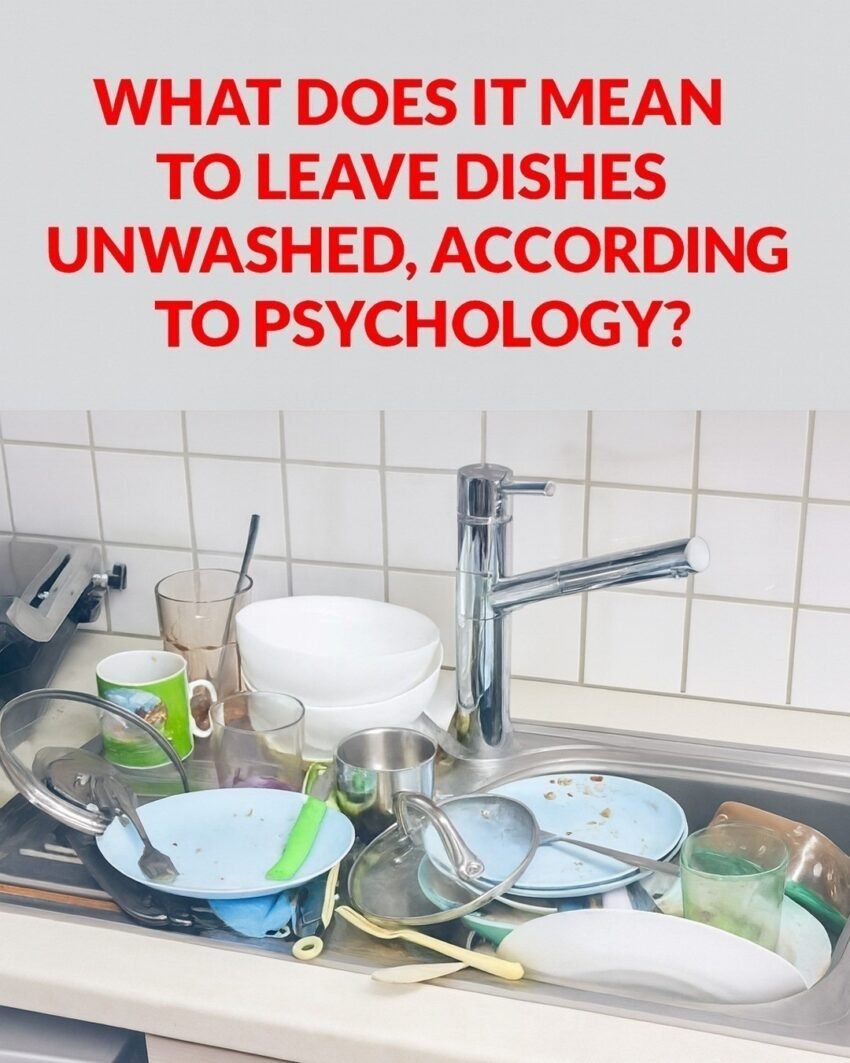
The act of leaving dirty dishes in the sink or on the counter is rarely just about laziness. It carries significant psychological meaning, and the decision to not let them pile up can be a powerful act of self-care. Here’s a breakdown:
The Psychological Meaning of Leaving Dirty Dishes Piled Up
-
A Symbol of Postponed Decisions:
-
Meaning: A dish represents a completed task (eating). Dealing with it requires a small, immediate decision: clean now or later? Piling them up is a physical manifestation of deferred decisions and avoidance. It’s a visual cue that “future me” will handle this.
-
Underlying Emotion: Overwhelm, decision fatigue, a desire to escape immediate responsibilities.
-
-
A Metric for Mental Load and Energy:
-
Meaning: On good days, dishes are a minor task. On low-energy days (due to depression, anxiety, burnout, or stress), they can feel like an insurmountable mountain. The pile becomes a barometer for your psychological resources. “I can’t even do the dishes” is a common symptom of mental health struggles.
-
Underlying Emotion: Depletion, low executive function, depression (“no spoons left”).
-
-
A Reflection of Self-Worth and Environment:
-
Meaning: Our external space often mirrors our internal state. A chronically chaotic kitchen can signal internal chaos, low self-priority, or a feeling of being undeserving of a clean, pleasant space. The message can be: “My comfort isn’t important.”
-
Underlying Emotion: Low self-worth, neglect of self-care, internal disorder.
-
-
A Form of Passive Resistance or Assertion of Control:
-
Meaning: In shared households, leaving dishes can be an unconscious (or conscious) act of rebellion—a protest against unfair division of labor, or a way to assert control when one feels powerless in other areas.
-
Underlying Emotion: Resentment, frustration, a need for autonomy.
-
-
The “Broken Window” Theory in Personal Life:
-
Meaning: This theory suggests that visible signs of disorder (like a broken window) lead to further disorder and crime. At home, a pile of dishes can be the first “broken window” that makes it psychologically easier to leave more clutter, skip other chores, and let general entropy set in.
-
Underlying Emotion: A surrender to chaos, loss of personal standards.
-
Why They Shouldn’t Pile Up: The Psychological Benefits of Keeping Up
-
Reduces Cognitive Load and Anxiety:
-
Benefit: Clutter is a constant, low-grade source of stress for the brain. It consumes background processing power (“I need to deal with that”). A clean sink provides visual calm, freeing up mental energy for more important tasks and reducing baseline anxiety.
-
-
Builds Momentum and a Sense of Agency:
-
Benefit: Completing a small, manageable task like washing dishes creates a “completion effect.” It gives you a small win, releasing dopamine and building momentum to tackle other tasks. It reinforces the empowering belief: “I am capable of maintaining my environment.”
-
-
Practices Mindfulness and Present-Moment Focus:
-
Benefit: The tactile, sensory act of washing dishes—feeling the warm water, the soap suds—can be a form of active meditation. It pulls you out of rumination about the past or future and anchors you in a simple, present-moment task. This can be incredibly grounding.
-
-
Cultivates Self-Respect and Ritual:
-
Benefit: Consistently maintaining a clean space is a ritual of self-respect. It signals to yourself, “I am worth a clean and functional environment.” It turns a chore into a caring practice for your future self, who will appreciate a ready kitchen.
-
-
Prevents the “Mountain” Phenomenon:
-
Benefit: A few dishes take 5 minutes. A pile from three days takes 45 grueling, demoralizing minutes. Not letting them pile up prevents a small task from transforming into a daunting, energy-draining chore that feels like a personal failure.
-
Practical Strategies (That Address the Psychology)
-
The “One-Minute Rule”: If it takes less than a minute, do it immediately. Rinse a mug and put it in the dishwasher. This prevents the initial accumulation.
-
Future Self-Kindness: Frame it as a gift. “I’m washing this pan now so my future self can have a peaceful morning.”
-
Pair It with Pleasure: Listen to a podcast, audiobook, or music you love only while doing dishes. This creates a positive association.
-
Mindful Practice: Treat it as your 5-minute mindfulness exercise. Focus solely on the sensations and the process.
-
For Shared Spaces: Have clear, fair agreements. Use a rota or assign days. Address the emotional labor (“I feel stressed when the kitchen is messy”) rather than attacking character (“You’re so lazy”).
Conclusion
Dirty dishes are more than just ceramic and food residue; they are
The act of leaving dirty dishes in the sink or on the counter is rarely just about laziness. It carries significant psychological meaning, and the decision to not let them pile up can be a powerful act of self-care. Here’s a breakdown:
The Psychological Meaning of Leaving Dirty Dishes Piled Up
-
A Symbol of Postponed Decisions:
-
Meaning: A dish represents a completed task (eating). Dealing with it requires a small, immediate decision: clean now or later? Piling them up is a physical manifestation of deferred decisions and avoidance. It’s a visual cue that “future me” will handle this.
-
Underlying Emotion: Overwhelm, decision fatigue, a desire to escape immediate responsibilities.
-
-
A Metric for Mental Load and Energy:
-
Meaning: On good days, dishes are a minor task. On low-energy days (due to depression, anxiety, burnout, or stress), they can feel like an insurmountable mountain. The pile becomes a barometer for your psychological resources. “I can’t even do the dishes” is a common symptom of mental health struggles.
-
Underlying Emotion: Depletion, low executive function, depression (“no spoons left”).
-
-
A Reflection of Self-Worth and Environment:
-
Meaning: Our external space often mirrors our internal state. A chronically chaotic kitchen can signal internal chaos, low self-priority, or a feeling of being undeserving of a clean, pleasant space. The message can be: “My comfort isn’t important.”
-
Underlying Emotion: Low self-worth, neglect of self-care, internal disorder.
-
-
A Form of Passive Resistance or Assertion of Control:
-
Meaning: In shared households, leaving dishes can be an unconscious (or conscious) act of rebellion—a protest against unfair division of labor, or a way to assert control when one feels powerless in other areas.
-
Underlying Emotion: Resentment, frustration, a need for autonomy.
-
-
The “Broken Window” Theory in Personal Life:
-
Meaning: This theory suggests that visible signs of disorder (like a broken window) lead to further disorder and crime. At home, a pile of dishes can be the first “broken window” that makes it psychologically easier to leave more clutter, skip other chores, and let general entropy set in.
-
Underlying Emotion: A surrender to chaos, loss of personal standards.
-
Why They Shouldn’t Pile Up: The Psychological Benefits of Keeping Up
-
Reduces Cognitive Load and Anxiety:
-
Benefit: Clutter is a constant, low-grade source of stress for the brain. It consumes background processing power (“I need to deal with that”). A clean sink provides visual calm, freeing up mental energy for more important tasks and reducing baseline anxiety.
-
-
Builds Momentum and a Sense of Agency:
-
Benefit: Completing a small, manageable task like washing dishes creates a “completion effect.” It gives you a small win, releasing dopamine and building momentum to tackle other tasks. It reinforces the empowering belief: “I am capable of maintaining my environment.”
-
-
Practices Mindfulness and Present-Moment Focus:
-
Benefit: The tactile, sensory act of washing dishes—feeling the warm water, the soap suds—can be a form of active meditation. It pulls you out of rumination about the past or future and anchors you in a simple, present-moment task. This can be incredibly grounding.
-
-
Cultivates Self-Respect and Ritual:
-
Benefit: Consistently maintaining a clean space is a ritual of self-respect. It signals to yourself, “I am worth a clean and functional environment.” It turns a chore into a caring practice for your future self, who will appreciate a ready kitchen.
-
-
Prevents the “Mountain” Phenomenon:
-
Benefit: A few dishes take 5 minutes. A pile from three days takes 45 grueling, demoralizing minutes. Not letting them pile up prevents a small task from transforming into a daunting, energy-draining chore that feels like a personal failure.
-
Practical Strategies (That Address the Psychology)
-
The “One-Minute Rule”: If it takes less than a minute, do it immediately. Rinse a mug and put it in the dishwasher. This prevents the initial accumulation.
-
Future Self-Kindness: Frame it as a gift. “I’m washing this pan now so my future self can have a peaceful morning.”
-
Pair It with Pleasure: Listen to a podcast, audiobook, or music you love only while doing dishes. This creates a positive association.
-
Mindful Practice: Treat it as your 5-minute mindfulness exercise. Focus solely on the sensations and the process.
-
For Shared Spaces: Have clear, fair agreements. Use a rota or assign days. Address the emotional labor (“I feel stressed when the kitchen is messy”) rather than attacking character (“You’re so lazy”).
Conclusion
Dirty dishes are more than just ceramic and food residue; they are psychologically loaded objects. Letting them pile up is often a cry for help from an overwhelmed system. Conversely, choosing to keep up with them is not about being obsessively clean, but about practicing preventive psychological hygiene. It’s a small, repeated investment in order, calm, and self-efficacy that pays substantial dividends for your mental well-being. It’s one of the most accessible ways to assert control over your environment and, by extension, your state of mind.
psychologically loaded objects. Letting them pile up is often a cry for help from an overwhelmed system. Conversely, choosing to keep up with them is not about being obsessively clean, but about practicing preventive psychological hygiene. It’s a small, repeated investment in order, calm, and self-efficacy that pays substantial dividends for your mental well-being. It’s one of the most accessible ways to assert control over your environment and, by extension, your state of mind.