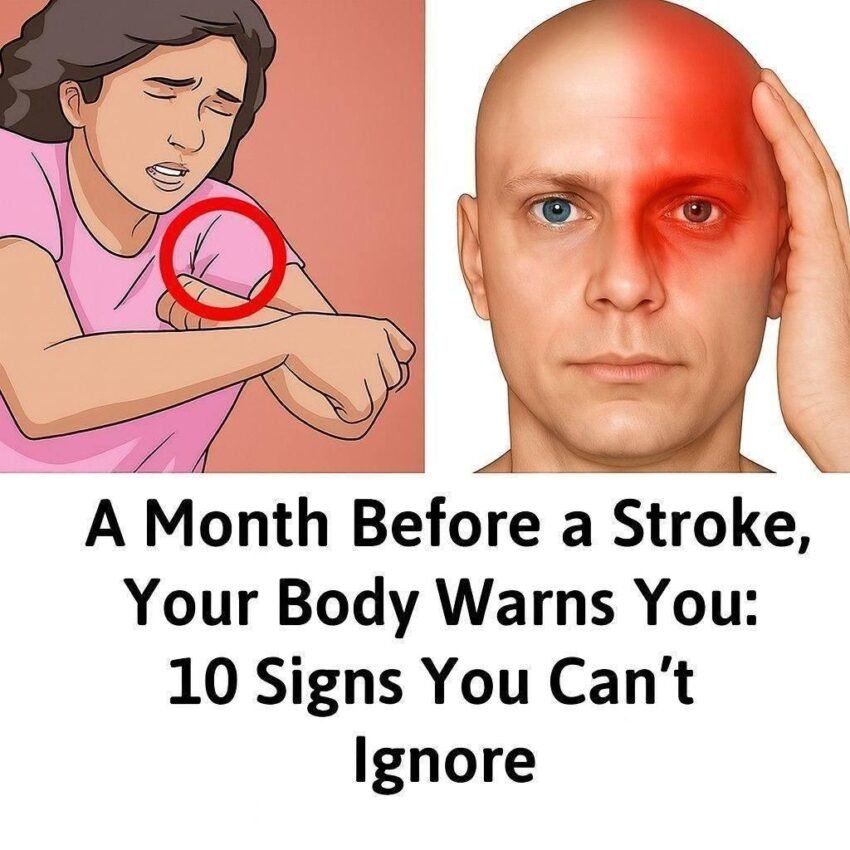
It’s important to clarify that a stroke is usually a sudden medical event, and there isn’t always a specific “month-long warning” period. However, some people may experience transient ischemic attacks (TIAs) or subtle symptoms weeks before a major stroke occurs.
Below are 10 potential signs that could be precursors and should never be ignored:
-
Sudden severe headache — Often described as “the worst headache of your life,” with no known cause.
-
Dizziness or loss of balance — Sudden trouble walking, coordination issues, or vertigo.
-
Numbness or weakness — Especially on one side of the body (face, arm, or leg).
-
Trouble speaking or understanding speech — Slurred words, confusion, or difficulty finding words.
-
Vision problems — Sudden blurred, blackened, or double vision in one or both eyes.
-
Brief episodes of weakness — Temporary weakness in a limb that resolves quickly (possible TIA).
-
Unexplained falls or clumsiness — Related to coordination or balance issues.
-
Memory lapses or confusion — Sudden confusion about time, place, or simple tasks.
-
Fatigue or sudden exhaustion — Unusual, extreme tiredness without clear reason.
-
High blood pressure fluctuations — Especially if accompanied by other symptoms.
Important notes:
-
A Transient Ischemic Attack (TIA) is a major warning sign and should be treated as a medical emergency even if symptoms go away.
-
Risk factors like hypertension, diabetes, smoking, high cholesterol, and atrial fibrillation increase stroke risk.
-
Act FAST if stroke symptoms appear: Face drooping, Arm weakness, Speech difficulty, Time to call emergency services.
If you or someone you know experiences any of these symptoms—even if they seem temporary—seek medical attention promptly for evaluation. Prevention and early intervention can save lives and reduce long-term damage.