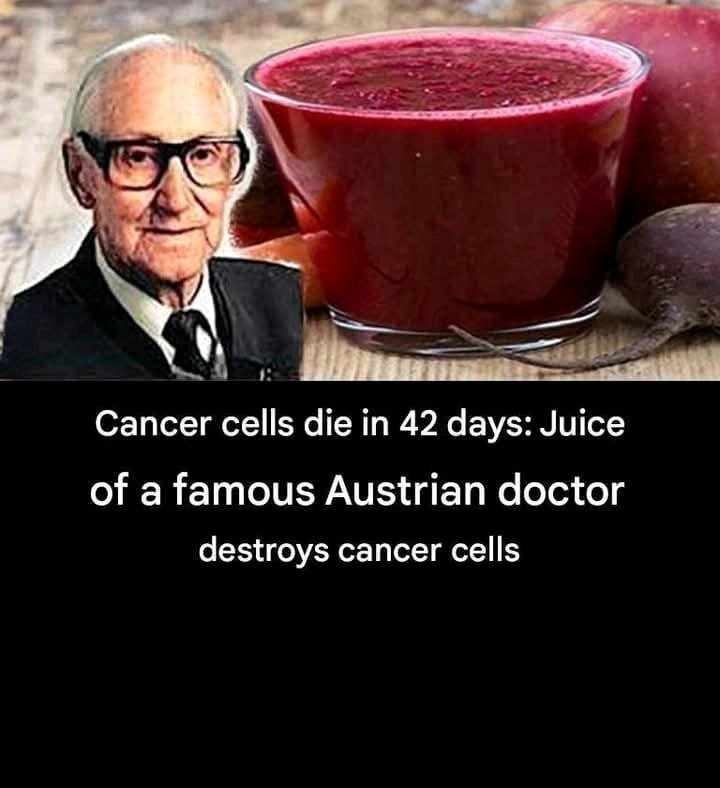
“Austrian doctor’s juice” curing cancer in 42 days is a persistent and dangerous myth, often associated with a purported “Breuss Diet” or “Breuss Juice” attributed to Rudolf Breuss.
It’s important to understand the facts and the significant risks of such claims:
What is the Claim?
The claim suggests that consuming a specific juice mixture (typically containing beetroot, carrot, celery, radish, and potato juice) while completely fasting for 42 days can starve and kill cancer cells.
Why is This Dangerous and Misleading?
-
No Scientific Evidence: There is no credible scientific or clinical evidence from reputable cancer research organizations (like the American Cancer Society, National Cancer Institute, etc.) that this regimen cures cancer. Cancer is not a single disease but hundreds of different diseases with complex causes and required treatments.
-
Starvation Does Not Selectively Target Cancer Cells: The idea of “starving” cancer cells is an oversimplification. While cancer metabolism is a real area of research, prolonged total fasting severely harms the entire body. A patient needs optimal nutrition to maintain strength, support their immune system, and tolerate evidence-based treatments like chemotherapy or radiation.
-
Severe Health Risks: A 42-day juice-only fast is extremely dangerous, leading to:
-
Severe malnutrition, muscle wasting, and catastrophic weight loss.
-
Electrolyte imbalances that can cause heart arrhythmias.
-
Weakening of the immune system.
-
Organ damage.
-
It can be fatal, especially for someone already weakened by cancer.
-
-
Delay of Proven Treatments: This is the greatest risk. Believing in such unproven remedies can lead patients to delay or forgo treatments that are scientifically proven to be effective (surgery, chemotherapy, immunotherapy, radiation, targeted therapy). This delay can allow the cancer to progress from a curable or treatable stage to an advanced, incurable one.
The Role of Diet in Cancer
While no specific diet or juice can cure cancer, nutrition plays a crucial supportive role:
-
A balanced, nutrient-rich diet helps patients maintain body weight, strength, and better tolerate treatments.
-
Some dietary patterns (like Mediterranean diets rich in fruits, vegetables, and whole grains) are associated with a reduced risk of developing certain cancers and can support overall health during recovery.
-
Always discuss dietary changes with your oncology team or a registered dietitian specializing in cancer care.
Bottom Line
This “42-day juice cure” is a medical myth. It is not a safe or effective treatment for cancer. It preys on the fear and desperation of patients and their families.
If you or someone you know is facing a cancer diagnosis:
-
Consult Qualified Oncologists: Rely on treatments backed by rigorous clinical trials and evidence.
-
Be Wary of “Miracle Cures”: If something sounds too good to be true, it almost always is. Be skeptical of claims that promise a simple, universal cure, especially if they discourage conventional medicine.
-
Seek Support from Reputable Sources: Organizations like the American Cancer Society or Cancer Research UK provide reliable, evidence-based information.
Your health is too important to risk on unproven and dangerous alternatives. Please seek guidance from licensed medical professionals.