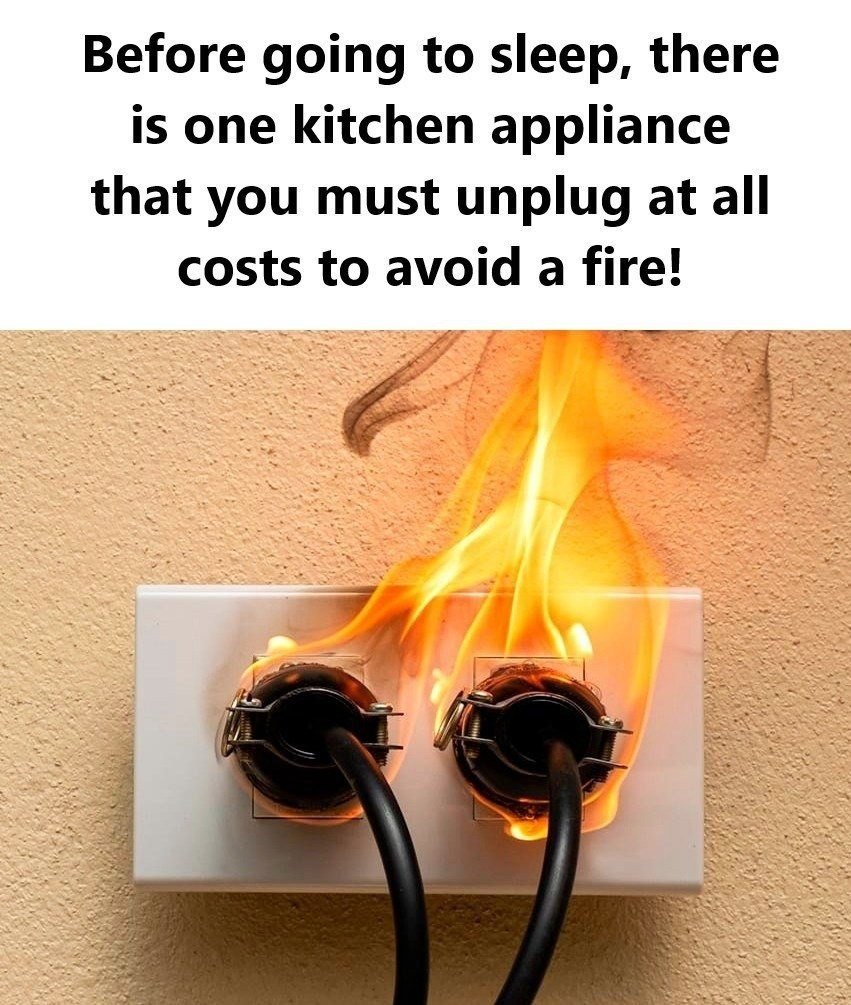
While it’s wise to be cautious about electrical safety, there isn’t one single kitchen appliance that everyone must unplug every night—safety depends largely on the appliance’s age, condition, and design.
That said, some appliances carry a higher risk if left plugged in unattended for long periods, and good habits can reduce fire hazards.
🔌 Higher-Risk Appliances to Consider Unplugging
-
Toasters & Toaster Ovens
-
Crumbs can accumulate and ignite if the heating element is activated accidentally or malfunctions.
-
Many lack true “off” switches; they’re idle but still drawing standby power.
-
-
Electric Kettles & Coffee Makers
-
Auto-start features or faulty thermostats could cause overheating.
-
Mineral buildup (especially in hard water areas) can affect safety mechanisms.
-
-
Slow Cookers & Hot Plates
-
Designed for long periods of use, but older models with worn cords or faulty wiring can overheat.
-
Avoid leaving them on overnight unless you’re certain they’re in good condition and designed for extended use.
-
-
Air Fryers & Pressure Cookers
-
Modern models have safety shutoffs, but recalls and malfunctions do happen.
-
If the cord or plug feels warm after use, unplug it when not in use.
-
-
Microwaves
-
Generally safe, but a power surge or faulty component could pose a risk.
-
Consider plugging it into a surge protector if it’s an older model.
-
✅ General Kitchen Electrical Safety Tips
-
Use surge protectors for countertop appliances.
-
Check cords and plugs regularly for fraying, discoloration, or warmth.
-
Keep appliances away from water and flammable materials (curtains, paper towels).
-
Follow manufacturer instructions for cleaning and maintenance (e.g., emptying toaster crumb trays).
-
Never use damaged appliances—replace them promptly.
🧯 The Most Important Fire Prevention Steps
-
Install smoke alarms in/near the kitchen and test them monthly.
-
Keep a fire extinguisher rated for kitchen fires (Class K or ABC) accessible.
-
Avoid overloading outlets—use dedicated circuits for high-wattage appliances.
-
Stay in the kitchen when cooking with oil or high heat.
🛌 Bottom Line
While you don’t necessarily need to unplug every appliance nightly, toasters, electric kettles, and older small appliances are good candidates if you want to be extra cautious. For most modern appliances in good condition, the risk is low—but good habits like checking cords and not leaving heat-generating appliances plugged in unnecessarily can add an extra layer of safety.
If you’re ever unsure about an appliance’s safety, unplug it when not in use—it also saves a small amount of standby power!