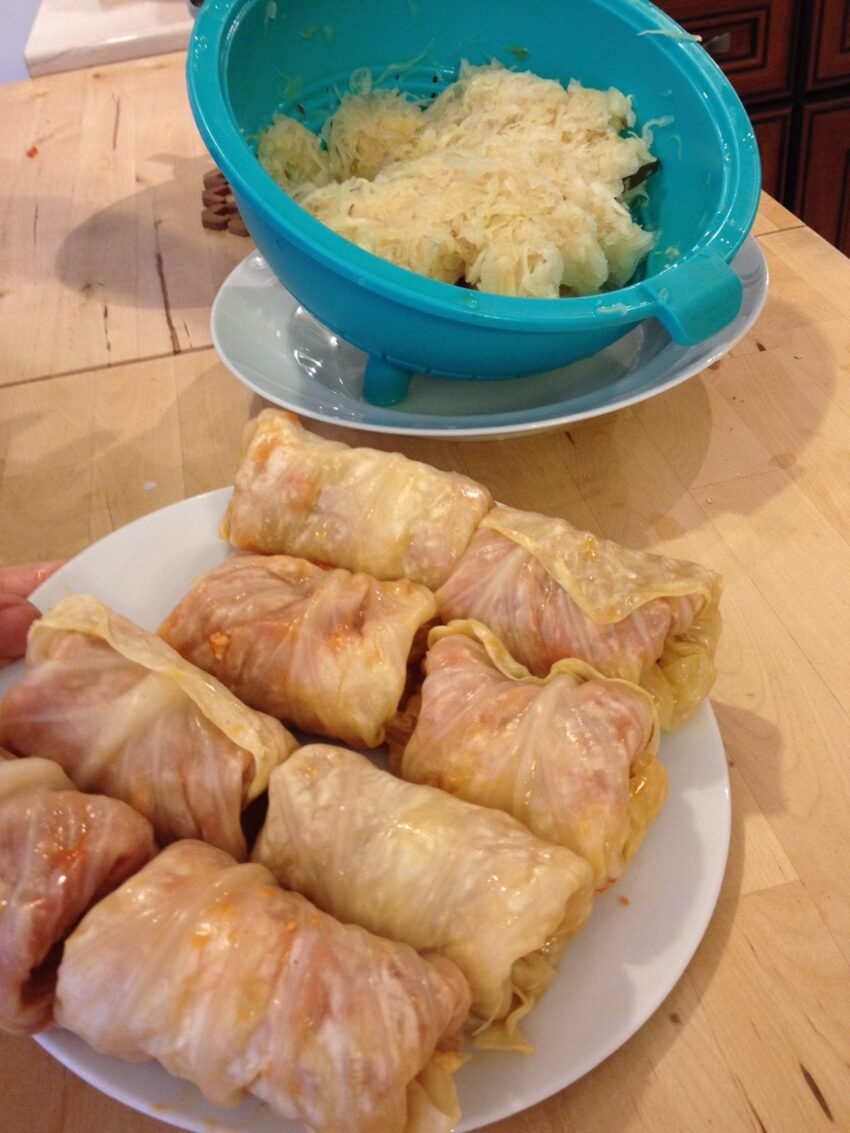
Töltött Káposzta is the epitome of Hungarian comfort food—a hearty, savory, and slightly tangy dish that warms you from the inside out. Here is a detailed guide to making an authentic version, complete with tips and context.
The Essence of the Dish
This is a dish of slowly simmered cabbage leaves stuffed with a savory pork-and-rice filling, cooked in a tangy sauerkraut and tomato broth. Its unique flavor profile comes from the balance of sweet paprika, the sourness from the sauerkraut, and the richness of the smoked meat.
Traditional Hungarian Stuffed Cabbage Rolls (Töltött Káposzta)
Ingredients
For the Cabbage & Base:
-
1 large head of savoy cabbage (or regular white cabbage) – for rolling
-
500g – 1kg sauerkraut (to line the pot and layer on top)
-
200g smoked pork ribs or smoked bacon (for depth of flavor)
-
1 large onion, finely chopped
-
2-3 tbsp sweet Hungarian paprika
-
1 tbsp lard or vegetable oil
-
2 tbsp tomato paste
-
1-2 bay leaves
-
Salt and pepper to taste
-
Optional: A few slices of kolbász (Hungarian smoked sausage) for extra smokiness.
-
Water or light broth
For the Filling:
-
500g ground pork (a mix of pork and beef is also common)
-
200g uncooked rice (short or medium grain)
-
1 small onion, finely grated or minced
-
2-3 cloves garlic, minced
-
1 tsp salt
-
½ tsp black pepper
-
1 tsp sweet Hungarian paprika
-
1 egg (to bind, traditional but optional)
-
A small bunch of fresh parsley, chopped
For Serving:
-
Sour cream (a must!)
-
Crusty bread or fresh white bread
Step-by-Step Instructions
1. Prepare the Cabbage Leaves:
-
The Freezing Method (Easiest): Freeze the whole head of cabbage for at least 48 hours. Thaw it completely. The leaves will become soft and pliable, ready to roll without pre-cooking.
-
The Boiling Method: Core the cabbage and place the whole head in a large pot of boiling water. As the outer leaves soften (5-7 minutes), carefully peel them off with tongs. Return the head to the water to soften the next layer. Trim the thick rib from each leaf to make rolling easier.
2. Make the Filling:
-
In a bowl, combine the ground meat, uncooked rice, grated onion, garlic, paprika, salt, pepper, egg, and parsley. Mix thoroughly with your hands until well combined.
3. Assemble the Rolls:
-
Place a heaping tablespoon (or more for larger leaves) of filling near the base of a cabbage leaf.
-
Fold the sides over the filling, then roll up tightly from the bottom, forming a neat package. The rice will expand during cooking, so don’t overfill.
4. Build the Pot (“Bogrács” or Dutch Oven):
-
In the bottom of a large, heavy pot, melt the lard and sauté the chopped onion until translucent. Remove from heat.
-
Crucial step: Stir in the 2-3 tbsp of sweet paprika off the heat to prevent it from burning and turning bitter.
-
Add the tomato paste and mix. Spread this mixture evenly over the bottom.
-
Add a layer of sauerkraut, then place the smoked ribs/bacon and bay leaves on top.
-
Neatly pack the cabbage rolls, seam-side down, in tight layers on top. Insert slices of kolbász between them if using.
-
Cover the rolls completely with more sauerkraut.
-
Pour in enough water or broth to just cover everything.
5. Cook:
-
Place a heavy plate or lid upside-down on top of the rolls to keep them submerged during cooking.
-
Cover the pot and bring to a simmer. Cook on low heat for at least 1.5 to 2 hours, until the rice is fully cooked, the meat is tender, and the flavors have melded. The slow simmer is key.
6. Serve:
-
Serve piping hot, with a generous dollop of cold sour cream on top. The contrast is divine.
-
Provide plenty of bread to soak up the delicious broth.
Key Tips for Authenticity
-
Paprika is King: Use real Hungarian sweet paprika. It’s non-negotiable for the authentic flavor.
-
The Sour Balance: The sauerkraut is essential for the characteristic tang. Rinse it slightly if you prefer a milder sourness.
-
Low and Slow: Don’t rush the cooking. The long, slow simmer makes the cabbage tender and the filling incredibly flavorful.
-
The Next Day is Better: Like most stews, Töltött Káposzta tastes even better reheated the next day.
Cultural & Serving Notes
-
Seasonal Dish: Traditionally made in late autumn and winter, especially for festive occasions and family gatherings.
-
Two Styles: The recipe above is the “savanyú” (sour) version. There’s also a “édes” (sweet) version, more common at festive times like Christmas, which uses a sweetened tomato sauce and often excludes sauerkraut.
-
A Full Meal: It’s typically served as a main course, preceded by a clear soup like consommé.
Jó étvágyat! (Enjoy your meal!)