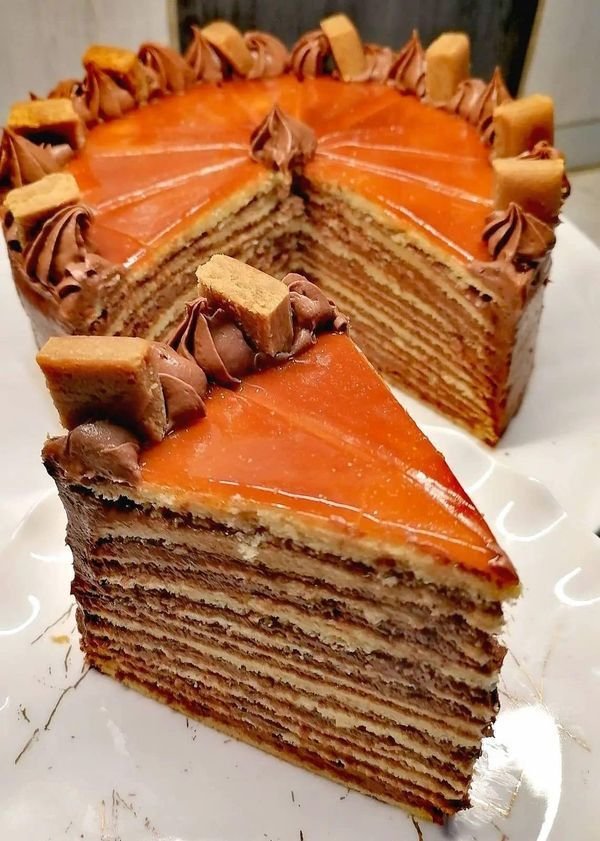
The Dobos Torte (pronounced DOH-bosh) is one of Hungary’s most famous and beloved traditional desserts, a true icon of Hungarian confectionery art.
Here’s a detailed look at this magnificent cake:
The Basics
The Dobos Torte is a multi-layered sponge cake, traditionally with six to eight thin layers, filled with a rich chocolate buttercream, and topped with a hard, shiny caramel glaze. Its defining characteristic is that the caramel top is scored into wedges before it hardens, creating a signature sunburst pattern.
History & Origin
-
Creator: József C. Dobos, a renowned Hungarian baker and confectioner.
-
Year: 1884.
-
Goal: Dobos wanted to create a cake that was both spectacular and would stay fresh longer than the pastries of his time. The combination of the buttercream (which didn’t require refrigeration with 19th-century ingredients) and the caramel seal achieved this brilliantly.
-
Legacy: It was an instant sensation, becoming the star of his delicatessen in Budapest and admired throughout the Austro-Hungarian Empire. It was even presented at the National General Exhibition of Budapest in 1885, solidifying its status as a national treasure.
Key Components & Construction
-
The Sponge Layers: The cake layers are uniquely thin, almost like crepes, and baked individually. They are dry and crisp, which allows them to absorb the moisture from the cream without becoming soggy.
-
The Chocolate Buttercream: This is a true chocolate buttercream (not a mousse or ganache), made by beating cooked sugar syrup into egg yolks, then blending in high-quality cocoa powder and a substantial amount of softened butter. It’s incredibly rich, smooth, and not overly sweet.
-
The Caramel Top: This is the showstopper. A layer of sugar is melted and caramelized, then poured over the final cake layer to create a thin, glossy sheet. Before it cools completely, it is scored with a buttered knife into the classic wedge segments. Sometimes the sides are also coated with crushed caramel pieces or finely chopped nuts.
Why It’s Special
-
Textural Symphony: The combination of the crisp caramel top, the tender sponge layers, and the velvety, rich buttercream creates an unparalleled eating experience.
-
Visual Elegance: Its geometric layers and glossy, scored caramel top make it a stunning centerpiece.
-
Historical Significance: It’s a masterpiece of culinary engineering from the 19th century that has remained virtually unchanged.
How to Enjoy It
-
Serving: It is always served in thin slices, due to its richness.
-
Pairing: A classic Hungarian pairing is with a glass of dry dessert wine, such as a Tokaji Szamorodni or a good coffee.
-
Where to Find: Any traditional Hungarian pastry shop (cukrászda) in Budapest or across Hungary will have it. Look for ones with a shiny, perfectly scored caramel top.
Fun Facts & Variations
-
Dobos’ Secret: József Dobos kept the recipe secret for over a decade before donating it to the Budapest Pastry and Honey-bread Makers’ Guild in 1906.
-
Modern Twists: While the classic is supreme, you might find variations with hazelnuts in the cream, different numbers of layers, or even a complete chocolate coating, but purists always look for the caramel top.
-
Global Influence: The cake became so famous that it influenced pastry-making across Europe and is still a staple in many Central European coffee houses.
In summary, the Dobos Torte is more than just a cake; it’s a symbol of Hungarian innovation, artistry, and culinary tradition. It’s a must-try for any visitor to Hungary and a celebrated recipe for bakers around the world.