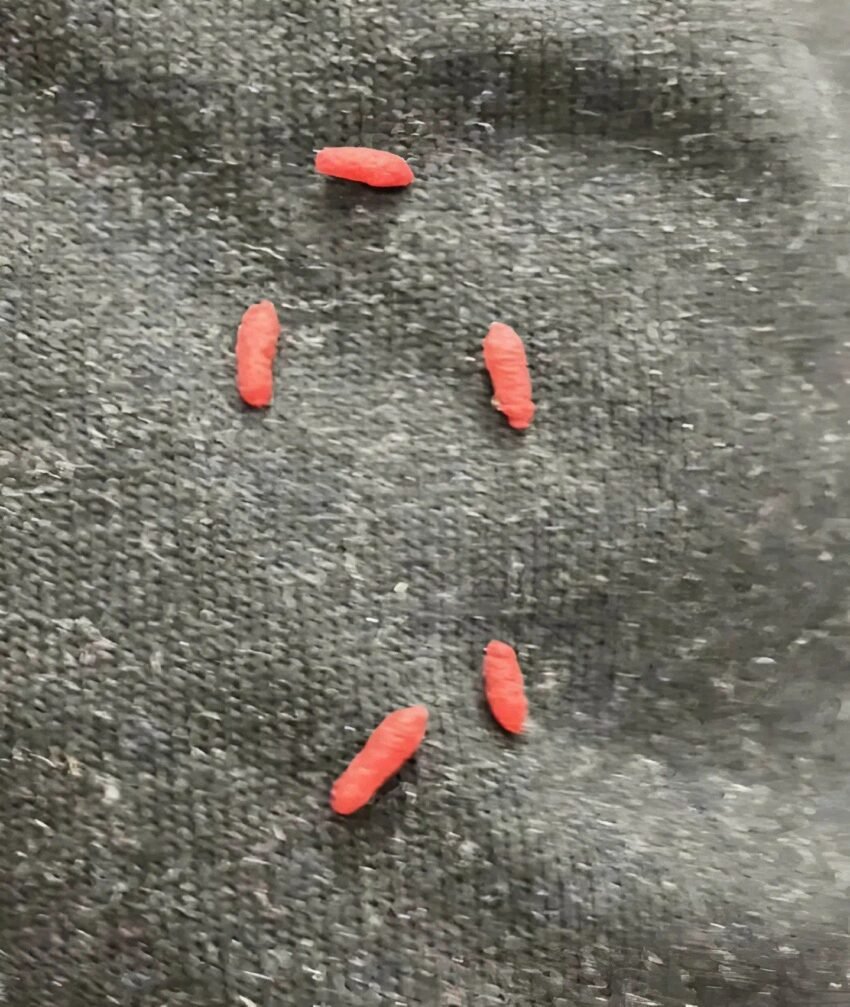
Here’s why that’s the most likely culprit:
-
Appearance: The larvae are small (1/4 inch), reddish-brown, hairy or bristly, and are often described as “tiny fuzzy caterpillars” or “little footballs.”
-
Habitat: They thrive in dark, undisturbed places like closets, drawers, and storage boxes—exactly where old sweaters are kept.
-
Diet: They feed on natural fibers like wool, cashmere, silk, fur, and feathers. Your old sweater is a perfect meal for them.
-
Signs: You might also find their shed skins or very fine, sand-like frass (droppings).
What You Should Do Immediately:
-
Isolate: Seal the sweater (and any other items from the same location) in a plastic bag immediately to prevent spreading.
-
Inspect Thoroughly: Check EVERY item in the closet, drawer, or storage box where the sweater was kept. Look in the seams, folds, and corners. Pay special attention to other natural fiber items.
-
Clean & Kill:
-
For the infested sweater, you have a few options. The most effective is to seal it in a plastic bag and freeze it for at least 72 hours (a week is better) to kill all life stages. Then, wash it on the hottest setting the fabric can tolerate.
-
Dry cleaning is another excellent and surefire option for delicate items.
-
Vacuum the storage area, closet, and drawers intensely. Use the crevice tool to get into every corner and seam. Empty the vacuum canister or discard the bag outside immediately.
-
-
Prevent Reinfestation:
-
Before storing seasonal clothes, always wash or dry-clean them.
-
Store clean items in sealed plastic containers rather than cardboard boxes or open shelves.
-
Consider using cedar blocks or lavender sachets as deterrents (though they are not foolproof killers).
-
In severe cases, you may need to treat the area with insecticides labeled for carpet beetles, focusing on baseboards and edges of carpets.
-
Other less likely possibilities could be clothes moth larvae (they are more whitish and create silken tunnels or cases) or even rodent mite nests (which would appear as a fine, powdery debris, often with live mites).
The key is to act quickly and systematically. It’s a nasty shock, but with thorough cleaning and preventive measures, you can get rid of them and protect the rest of your wardrobe. Take a deep breath—you’ve caught it, and now you can deal with it.