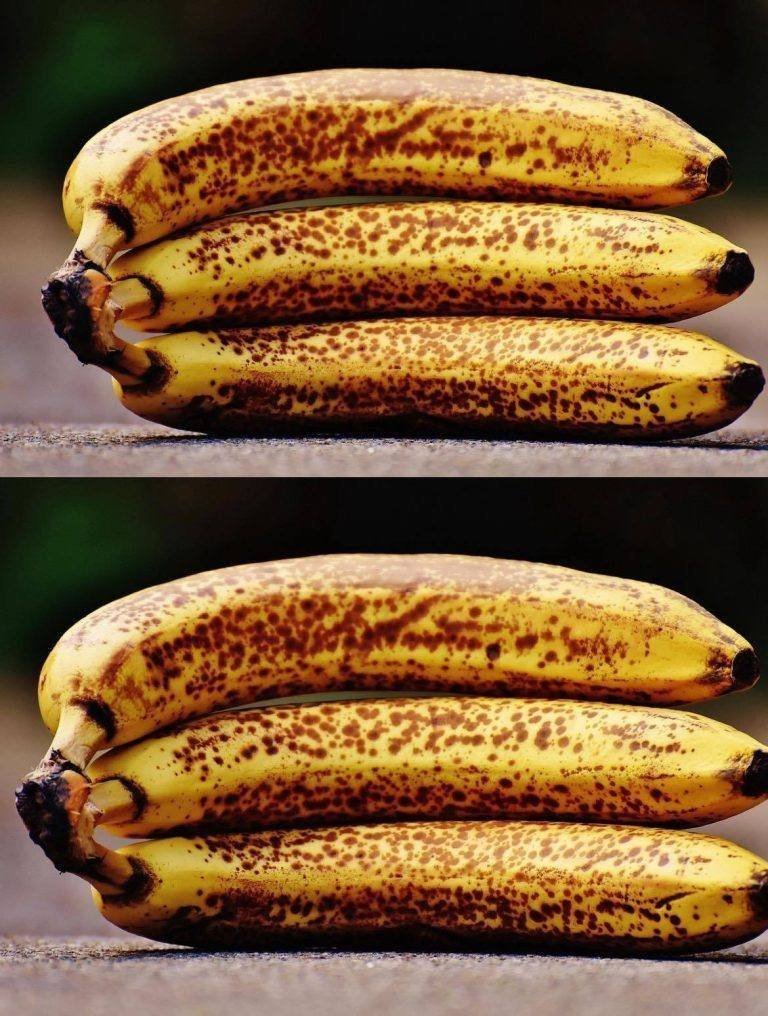
There are a few things to know about eating bananas with black spots, and the main takeaway is that they are generally safe to eat and often considered at their peak of sweetness.
Here’s what you should know:
1. It’s a Natural Ripening Process
The black spots (or “sugar spots”) are simply a sign that the starch in the banana has converted to sugar. This means the banana will be softer and sweeter than a yellow, spotless one. The spots themselves are areas where the banana peel’s pigment has broken down.
2. Nutritional Changes
As bananas ripen and develop spots:
-
Sugar content increases (making them taste sweeter).
-
Antioxidant levels increase (particularly in the fully ripe, spotted stage).
-
Some studies suggest they develop compounds that may boost the immune system.
-
The fiber content remains, aiding digestion.
3. When to Be Cautious
-
Mold: If you see fuzzy mold (white, green, or black) on the peel or flesh, discard the banana.
-
Large Bruises or Split Skin: This can allow bacteria to enter.
-
Overly Mushy, Dark Flesh: If the inside is excessively dark, watery, or smells fermented, it’s past its prime.
4. Best Uses for Spotted Bananas
They are perfect for:
-
Baking (banana bread, muffins, pancakes)
-
Smoothies
-
Ice cream or “nice cream”
-
Oatmeal or yogurt toppings
Mashing and freezing them for later use is a great trick.
5. Potential for Reducing Food Waste
Embracing spotted bananas helps reduce food waste. A banana with dark spots is not “bad”—it’s just at a different, often more useful, stage of ripeness.
In short: Bananas with black spots are not only safe to eat but deliciously sweet and nutritious. Use your senses—if it smells fine, tastes fine, and has no mold, enjoy it!
Just remember: if the spots have taken over completely and the inside is turned to a dark mush, it’s probably time to compost it.