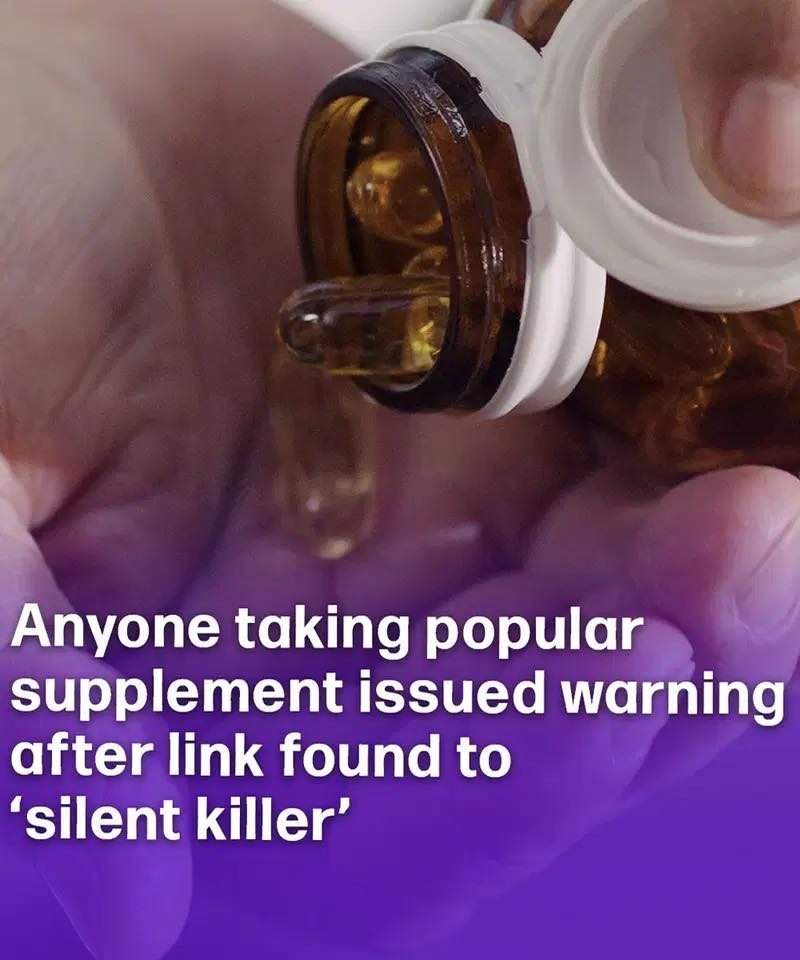
It’s crucial to approach such headlines with critical thinking and perspective. News about “new research raising major health concerns” is extremely common, but often lacks context and can cause unnecessary alarm.
Before worrying, let’s break down how to interpret this kind of information responsibly:
🔍 How to Responsibly Evaluate “Major Health Concern” Headlines
-
Identify the Source.
-
Is it from a peer-reviewed, reputable journal (e.g., Nature, The Lancet, JAMA)?
-
Or is it from a news outlet, blog, or social media post? The latter often sensationalizes preliminary findings.
-
-
Check the Study Type and Scope.
-
Animal study (in mice/rats)? Findings often don’t translate directly to humans.
-
Observational study (in humans)? These can find correlations (A and B happen together) but cannot prove causation (A causes B). They are hypothesis-generating, not conclusive.
-
Small sample size? Results may not be generalizable to the broader population.
-
Was it a controlled clinical trial (the gold standard)? These provide much stronger evidence.
-
-
Look for the Magnitude of the Risk.
-
Did the risk increase by 500% (a 5x relative risk) or by 20% (a 1.2x relative risk)? Headlines often omit this. A large relative increase from a tiny absolute baseline risk may not be clinically meaningful.
-
Example: “Doubles the risk!” could mean an increase from 1 in a million to 2 in a million.
-
-
Consider the Broader Scientific Consensus.
-
Is this a single, outlier study contradicting decades of established research? Science advances by replication. One study is a data point; a consensus is the picture.
-
-
Be Wary of “Miracle Cure” or “Poison” Narratives.
-
Extreme language is a red flag. Real science is almost always about nuance, probability, and trade-offs (e.g., a medication with a rare side effect but a proven life-saving benefit).
-
📰 Common Topics for “Major Health Concern” Headlines
Recent cycles have often focused on:
-
Ultra-Processed Foods (UPFs): Stronger evidence is emerging linking high consumption to negative health outcomes. The concern is legitimate and backed by a growing body of research.
-
Specific Food Additives or Chemicals: (e.g., titanium dioxide, certain emulsifiers, aspartame). These often involve high-dose animal studies or observational data, leading to classification debates (IARC’s “possibly carcinogenic”).
-
Popular Drugs or Supplements: New analyses may identify rare side effects in large population studies, leading to updated risk-benefit profiles.
-
Environmental Exposures: Plastics, air pollution, “forever chemicals” (PFAS). This is an area of active and serious research with complex exposure pathways.
🛡️ What You Should Do: A Practical Action Plan
Instead of reacting to every alarming headline, build a resilient, evidence-based lifestyle:
-
Don’t Panic or Make Drastic Changes Immediately. Wait for guidance from major public health bodies (CDC, WHO, NHS, FDA) who review the totality of evidence.
-
Adopt Broad, Proven Healthy Habits. These protect against a wide array of risks, known and unknown:
-
Eat a balanced diet rich in whole foods—fruits, vegetables, legumes, whole grains, nuts, seeds.
-
Limit ultra-processed foods as a general principle.
-
Stay physically active.
-
Prioritize sleep and manage stress.
-
Avoid smoking and limit alcohol.
-
-
Talk to Your Doctor, not the internet, about personal health decisions. Context matters (your personal/family history, current medications).
-
Follow Reputable Science & Health Communicators: Look for experts and institutions that explain the quality of the evidence, not just the scary conclusion.
Bottom Line: New research is how science self-corrects and improves. A single concerning study is a signal for the scientific community to investigate further—it is rarely a signal for the public to radically change their lives. Focus on the big, well-established pillars of health, and consult trusted professionals for personal advice.