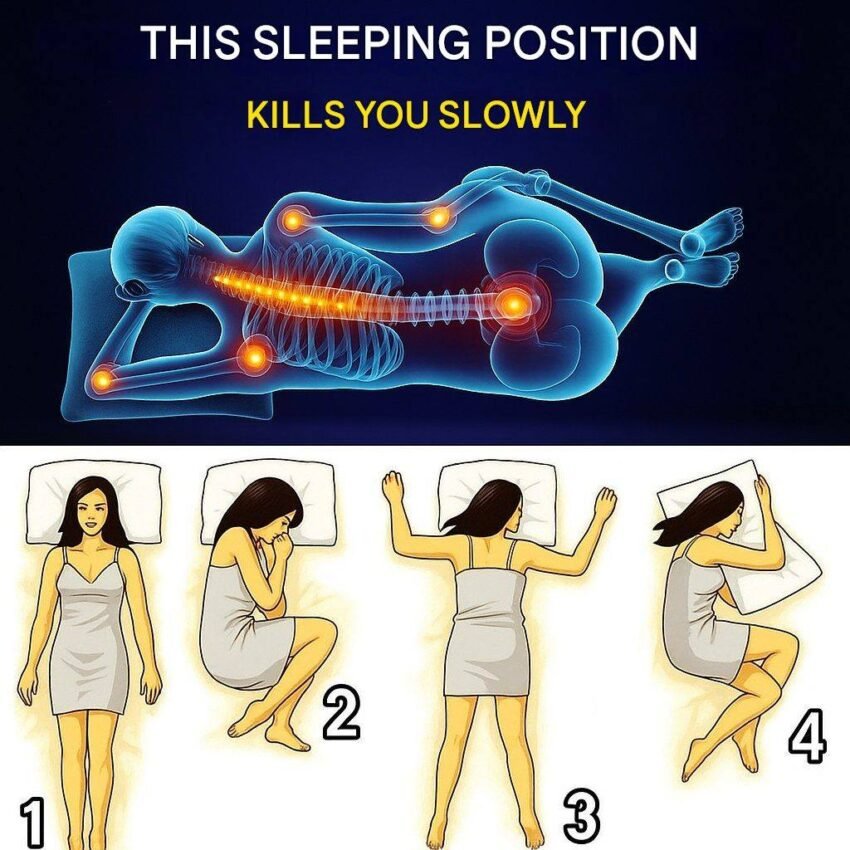
That’s a fascinating question, because the “most dangerous” sleeping position often depends on your specific health conditions. While back and side sleeping are widely recommended, one position stands out as surprisingly risky for multiple reasons, especially when combined with certain factors:
The Most Dangerous: Stomach Sleeping (Prone Position)
It’s often called the position you “didn’t imagine” because many people find it comfortable, but it forces your spine, neck, and organs into a compromised state.
Why It’s So Problematic:
-
Spinal Misalignment: Your spine is in a neutral position when standing. Stomach sleeping forces an exaggerated arch in the lower back and twists the neck to one side for hours. This puts constant strain on muscles, ligaments, and joints, leading to chronic pain, stiffness, and nerve irritation.
-
Neck Torque: You must turn your head nearly 90 degrees to breathe. This can pinch nerves (like a mild form of “sleeping on your neck wrong” every night), strain cervical vertebrae, and reduce blood flow to the brain. Over time, this can contribute to cervical degenerative disc disease.
-
Impaired Breathing & Circulation: The pressure on your chest cavity can restrict diaphragm movement, leading to shallower breathing. It can also put pressure on blood vessels and nerves.
-
Wrinkle Formation & Skin Stress: Constant facial compression against the pillow can break down collagen and elastin, leading to more pronounced sleep lines and premature wrinkles.
-
For Infants: This is the single most critical danger. Stomach sleeping is a major risk factor for Sudden Infant Death Syndrome (SIDS) as it can obstruct airways and impair the baby’s ability to regulate breathing and arousal. Babies should always be placed on their backs to sleep.
However, Danger is Context-Dependent:
-
For People with Sleep Apnea: Back sleeping (supine) is the most dangerous. Gravity causes the tongue and soft tissues to collapse backward, severely worsening airway obstruction and apneas. For them, side sleeping is lifesaving.
-
For People with Heart Failure: Some studies suggest sleeping on the right side may increase pressure on the heart, while the left lateral position may be better, though this is still debated.
-
For Pregnancy (especially late-term): Back sleeping is discouraged after 20+ weeks. The weight of the uterus can compress the inferior vena cava (a major vein), reducing blood flow to the mother’s heart and the baby. The recommended position is side sleeping, especially on the left side.
The Verdict & Safer Alternatives:
For the average adult, stomach sleeping poses the greatest combination of common risks. If you can’t break the habit:
-
Use a very thin pillow or no pillow under your head to reduce neck strain.
-
Place a flat pillow under your hips/pelvis to help keep your spine more neutral.
Healthiest Positions for Most People:
-
Side Sleeping (Fetal or Log Position):
-
Pros: Excellent for reducing snoring and sleep apnea, aids digestion (especially left side), good for brain waste clearance (glymphatic system), and ideal for pregnancy.
-
Cons: Can cause shoulder/hip pain from pressure. Use a supportive pillow between your knees and ensure your head pillow keeps your neck aligned.
-
-
Back Sleeping (Supine):
-
Pros: Best for spinal alignment, minimizes wrinkles, and reduces acid reflux if the head is elevated.
-
Cons: Worst for snoring and obstructive sleep apnea. Not recommended for pregnant women in later stages.
-
Final Thought: The most dangerous position is one that exacerbates an underlying condition you may have. If you snore loudly, gasp for air, or have chronic pain, discussing your sleep position with a doctor is the most important step. The danger isn’t just in the pose itself, but in its mismatch with your personal health profile.
That’s a fascinating question, because the “most dangerous” sleeping position often depends on your specific health conditions. While back and side sleeping are widely recommended, one position stands out as surprisingly risky for multiple reasons, especially when combined with certain factors:
The Most Dangerous: Stomach Sleeping (Prone Position)
It’s often called the position you “didn’t imagine” because many people find it comfortable, but it forces your spine, neck, and organs into a compromised state.
Why It’s So Problematic:
-
Spinal Misalignment: Your spine is in a neutral position when standing. Stomach sleeping forces an exaggerated arch in the lower back and twists the neck to one side for hours. This puts constant strain on muscles, ligaments, and joints, leading to chronic pain, stiffness, and nerve irritation.
-
Neck Torque: You must turn your head nearly 90 degrees to breathe. This can pinch nerves (like a mild form of “sleeping on your neck wrong” every night), strain cervical vertebrae, and reduce blood flow to the brain. Over time, this can contribute to cervical degenerative disc disease.
-
Impaired Breathing & Circulation: The pressure on your chest cavity can restrict diaphragm movement, leading to shallower breathing. It can also put pressure on blood vessels and nerves.
-
Wrinkle Formation & Skin Stress: Constant facial compression against the pillow can break down collagen and elastin, leading to more pronounced sleep lines and premature wrinkles.
-
For Infants: This is the single most critical danger. Stomach sleeping is a major risk factor for Sudden Infant Death Syndrome (SIDS) as it can obstruct airways and impair the baby’s ability to regulate breathing and arousal. Babies should always be placed on their backs to sleep.
However, Danger is Context-Dependent:
-
For People with Sleep Apnea: Back sleeping (supine) is the most dangerous. Gravity causes the tongue and soft tissues to collapse backward, severely worsening airway obstruction and apneas. For them, side sleeping is lifesaving.
-
For People with Heart Failure: Some studies suggest sleeping on the right side may increase pressure on the heart, while the left lateral position may be better, though this is still debated.
-
For Pregnancy (especially late-term): Back sleeping is discouraged after 20+ weeks. The weight of the uterus can compress the inferior vena cava (a major vein), reducing blood flow to the mother’s heart and the baby. The recommended position is side sleeping, especially on the left side.
The Verdict & Safer Alternatives:
For the average adult, stomach sleeping poses the greatest combination of common risks. If you can’t break the habit:
-
Use a very thin pillow or no pillow under your head to reduce neck strain.
-
Place a flat pillow under your hips/pelvis to help keep your spine more neutral.
Healthiest Positions for Most People:
-
Side Sleeping (Fetal or Log Position):
-
Pros: Excellent for reducing snoring and sleep apnea, aids digestion (especially left side), good for brain waste clearance (glymphatic system), and ideal for pregnancy.
-
Cons: Can cause shoulder/hip pain from pressure. Use a supportive pillow between your knees and ensure your head pillow keeps your neck aligned.
-
-
Back Sleeping (Supine):
-
Pros: Best for spinal alignment, minimizes wrinkles, and reduces acid reflux if the head is elevated.
-
Cons: Worst for snoring and obstructive sleep apnea. Not recommended for pregnant women in later stages.
-
Final Thought: The most dangerous position is one that exacerbates an underlying condition you may have. If you snore loudly, gasp for air, or have chronic pain, discussing your sleep position with a doctor is the most important step. The danger isn’t just in the pose itself, but in its mismatch with your personal health profile.