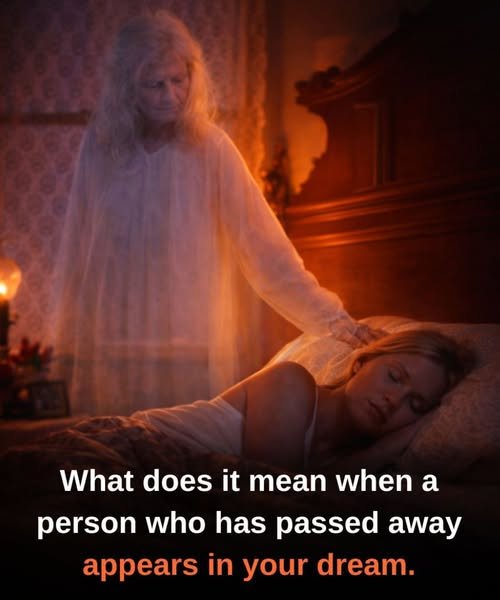
The appearance of a deceased loved one in a dream is a profound and personal experience, and its meaning is deeply subjective. There is no single, universal interpretation, as it depends on your beliefs, emotional state, and life context. Here are the primary lenses through which this experience is often understood, which you might consider:
1. The Psychological & Emotional Perspective
This is the most common modern interpretation within psychology and neuroscience. The dream is seen as a reflection of your own inner world.
-
Processing Grief: Your subconscious mind is continuing to work through the complex emotions of loss—longing, sadness, unresolved feelings, or even guilt. The dream can be a safe space for this processing.
-
Seeking Comfort or Closure: You may be at a point where you deeply miss the person or are facing a challenge where you wish for their guidance. The dream can provide symbolic comfort or a sense of connection.
-
Integrating Memories: Your brain is actively keeping the memory of that person alive, weaving them into your ongoing life narrative.
-
Unresolved Issues: If there was unfinished business or something left unsaid, the dream might be a manifestation of your desire for resolution.
2. The Symbolic & Metaphorical Perspective
In this view, the deceased person might not be “them” literally, but rather represent an aspect of yourself or a message.
-
They Represent a Quality: The person could symbolize a trait they embodied (like wisdom, strength, or free-spiritedness) that you need to access in your current life.
-
A Message About Change or Legacy: Their appearance might coincide with you letting go of an old part of your life or stepping into a new phase they influenced.
3. The Spiritual & Cultural Perspective
Many spiritual and cultural traditions around the world interpret these dreams as more than just brain activity.
-
A Visitation Dream: Some believe it can be an actual communication or visit from the consciousness or spirit of the departed. These dreams are often described as feeling strikingly vivid, peaceful, and “realer than real,” with a clear, loving message.
-
Ancestral Connection: In some cultures, such dreams are seen as a sign that the ancestor is watching over you, offering protection, or reminding you of your roots and lineage.
-
A Sign or Reassurance: It might be interpreted as a sign that the person is at peace, or that the bond of love transcends physical death.
4. The Neurological Perspective
Science explains that during REM sleep, the brain is highly active in regions associated with memory and emotion. It constructs narratives by pulling from our memory bank. Seeing a familiar face, especially one charged with emotion, is a natural function of this process.
What It Means to “Think” About It
When the experience makes you pause and think deeply, it’s an invitation to self-reflection. Instead of asking, “What does this mean universally?” ask yourself:
-
What was the emotional tone of the dream? (Peaceful, anxious, joyful, sad?)
-
What was happening in the dream? Was there communication? A feeling? An activity?
-
What is happening in my waking life right now? Am I at a crossroads, feeling loss, needing guidance, or celebrating something they’d have loved?
-
How did I feel upon waking? Comforted, unsettled, loved, confused?
The most important meaning is the one you derive from it. Whether you see it as a comforting neurobiological process, a profound spiritual connection, or a bit of both, the dream’s significance lies in its personal impact. It often highlights the enduring place that person holds in your heart and psyche, and can be a powerful part of the ongoing relationship we have with those we love after they are gone.
Consider: The dream may be less about them and more about you—your needs, your memories, and your journey toward healing and meaning