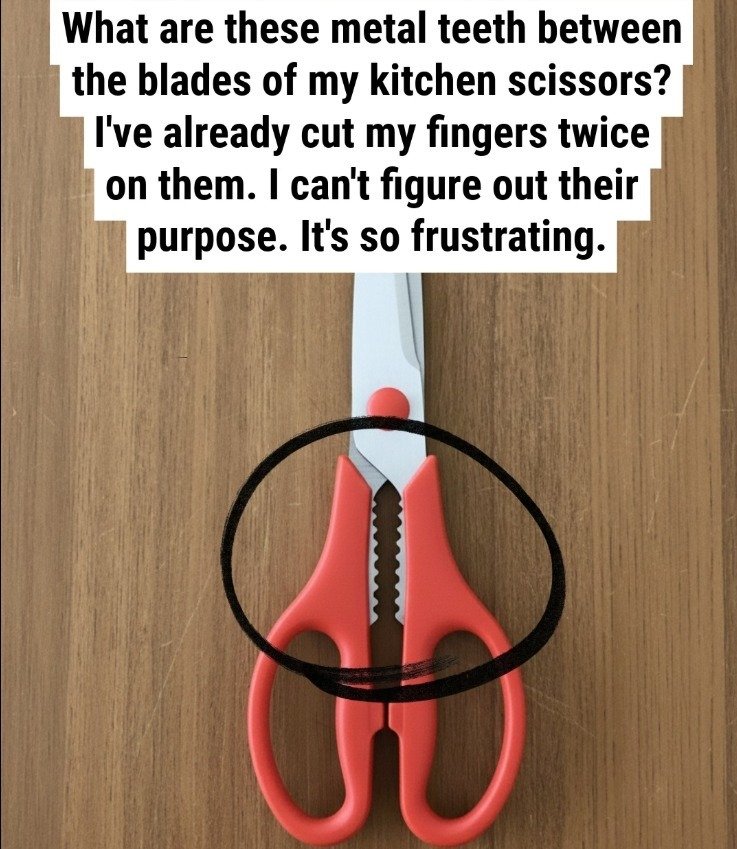
That jagged section on kitchen scissors (often called a serrated blade or jagged edge) serves several practical purposes:
-
Gripping and Preventing Slippage: Its primary function is to grip slippery, tough, or flexible materials. The teeth bite into the surface, preventing the item from sliding out while you cut. This is especially useful for:
-
Poultry and fish: Cutting through skin, tendons, and bones.
-
Herbs and leafy greens: Bunches of parsley, cilantro, or chives are less likely to slip.
-
Tough vegetable skins: Like on peppers or eggplants.
-
-
Slicing Through Fibrous Materials: The serrations act like a small saw, making it easier to initiate cuts and slice through fibrous foods that a straight blade might just crush or push, such as:
-
Pineapple skin and core
-
Tough stalks (e.g., rosemary, thyme)
-
Artichoke leaves
-
-
Multipurpose Kitchen Tool: Many kitchen scissors are designed as all-in-one tools. The jagged section often doubles for other tasks, like:
-
Cracking nuts (placed in the serrated notch).
-
Opening bottles (using a built-in bottle opener, often near the pivot).
-
Stripping herbs (pulling stems through the teeth).
-
-
Non-Kitchen Uses: People frequently use kitchen scissors for household tasks, and the serrated edge is great for cutting:
-
Cardboard
-
Plastic packaging
-
Sandpaper
-
Twine and thin rope
-
In short, it’s a feature designed for control and power when dealing with challenging, slippery, or fibrous materials, making the scissors more versatile and effective.